Your Ultimate Guide to the Most Thrilling Casino Games You Can Play Right Now
Decades of behavioral research reveal that the house edge makes losing a mathematical certainty over time, not a personal failing. Casino games work by using random number generators or physical mechanics to create predetermined odds favoring the establishment. The true benefit lies in treating bets as entertainment costs, where you pay only for the thrill of play rather than expecting financial returns. To use them responsibly, set strict time and money limits before starting, ensuring the experience stays enjoyable without harmful consequences.
Understanding the Mechanics of House Advantage
The house advantage is a mathematical edge built into every casino game, ensuring the casino profits over time. In games like roulette, it stems from the extra zero(s) on the wheel; in blackjack, from the dealer acting last. Understanding this mechanic lets you choose games with lower edges, such as baccarat’s banker bet or craps’ pass line bet. Q: Why does the house always win in the long run? A: Because the house advantage, expressed as a percentage of each bet the casino expects to keep, guarantees profitability through probability, not luck. This edge remains constant regardless of player strategy.
How probability shapes your odds in table games
In table games, probability is the invisible hand that dictates your long-term odds. Every card dealt in blackjack or roll of the dice in craps is governed by fixed mathematical ratios. Understanding these ratios helps you identify which bets carry the lowest house edge. For instance, betting on “pass line” in craps offers far better odds than a “hard way” bet, directly because its probability of occurring is higher. This probability-driven decision making separates informed players from those relying on luck. By choosing actions with favorable likelihoods, you directly reduce the mathematical advantage the casino holds against you over time.
The role of random number generators in digital play
In digital casino games, random number generators (RNGs) are the core software algorithms that determine every outcome, from reel spins to card draws. They produce a constant, unpredictable stream of numbers, each one instantly mapped to a specific game result. This process happens in milliseconds, ensuring no two outcomes are linked. To maintain house advantage, the RNG is calibrated so that over millions of cycles, the game’s statistical return to player (RTP) is precisely achieved. Players cannot influence or predict the sequence. The RNG cycle is seeded with a starting value, and the sequence’s absolute unpredictability is what makes each spin or hand independent of all previous ones.
- The RNG generates a random seed value when the game loads.
- Each player action (e.g., clicking “spin”) triggers the RNG to fetch the next number in its sequence.
- That number is translated into a specific outcome (e.g., a reel position or card rank).
- The system immediately resets to await the next trigger, maintaining independence.
RTP percentages explained for slot enthusiasts
For slot enthusiasts, the RTP percentage is your primary tool for game selection. This figure, typically between 94% and 98%, represents the theoretical return over millions of spins—it is not a guarantee for a single session. A high RTP slot reduces the casino’s mathematical edge, directly influencing your long-term bankroll. To leverage this:
- Check the game’s menu or online provider specs for the exact RTP.
- Prioritize slots with 96% or higher, as lower percentages accelerate losses.
- Understand that RTP is a long-term average; short-term variance can still produce wins or streaks.
Always verify the RTP, as different casinos may offer altered versions of the same slot, impacting your statistical odds.
Strategic Approaches to Classic Card Games
Mastering strategic approaches to classic card games in a casino setting transforms luck into a calculated edge. For blackjack, basic strategy dictates every hit, stand, or double down based on your hand versus the dealer’s upcard, drastically reducing the house edge. In baccarat, the optimal play is always betting on the banker due to its lower commission, avoiding the tie bet entirely. Poker variants like Three Card Poker reward a tight-aggressive approach, folding weak hands while raising on high pairs or better to maximize odds. Card counting in blackjack remains a viable, though challenging, tactic for tracking high versus low cards to adjust bet sizing. Never deviate from these core principles based on gut feeling; consistent application is the only path to sustainable play.
Blackjack: mastering basic strategy charts
Mastering basic strategy charts is the single most impactful step you can take to sharpen your edge at the blackjack table. These charts remove guesswork by dictating the exact play—whether to hit, stand, split, or double down—based on your hand versus the dealer’s upcard. Perfecting basic strategy charts slashes the house edge to roughly 0.5%, transforming you from a casual gambler into a disciplined player. By committing these probability-driven decisions to memory, you eliminate costly emotional reactions and consistently make the mathematically optimal move, turning every round into a calculated battle rather than a simple gamble.
Baccarat betting systems and when to use them
In Baccarat, betting systems like the Martingale or Paroli are tactical tools, not guarantees. Use the Martingale strategy only on short, low-session bankrolls to recover losses on the Banker bet, doubling after each loss until a win resets the sequence. The Paroli system, a positive progression, is best deployed during winning streaks on Player bets to capitalize on momentum. Never apply systems to Tie bets due to high house edge. Always set a strict loss limit before starting, as progressions escalate risk rapidly. A flat-betting approach outperforms systems over extended play.
Use Baccarat betting systems strictly as short-term session tactics, not long-term solutions, with fixed loss limits to manage volatility.
Poker variants: Texas Hold’em vs. Three Card

Texas Hold’em and Three Card Poker demand distinct strategic frameworks. In Hold’em, success hinges on reading opponents and calculating pot odds across multiple betting rounds, with hand selection based on position being critical. Conversely, Three Card Poker relies on a fixed house-edge percentage and simplified decisions: players only choose to play or fold based on their three-card hand’s strength against the dealer’s qualifying hand. Hold’em offers bluffing opportunities and deep stack management, while Three Card emphasizes quick, math-based choices with no community cards.
Texas Hold’em focuses on multi-round psychology and position-based hand selection; Three Card Poker prioritizes single-round mathematics and dealer qualification rules.
Card counting myths and the reality behind them
Many believe card counting guarantees instant wins, but the reality is it only shifts the house edge by a narrow margin. The myth that casinos can’t stop a skilled counter is false; they routinely shuffle decks early or ban proficient players. Another fallacy is that you must memorize every card, whereas successful counters rely on a simple running count. True proficiency requires flawless execution under intense scrutiny, not raw intelligence or a photographic memory. The notion that counting is illegal is also incorrect—it’s merely frowned upon, leading to ejection rather than arrest. Card counting’s practical reality is a disciplined, fatiguing skill that offers slim, temporary advantages, not Hollywood riches.
| Myth | Reality |
|---|---|
| Counting gives you a big edge | Edge is usually 0.5–1.5% |
| Casinos tolerate counters | They actively counter with shuffles and bans |
| You need a photographic memory | Only basic arithmetic is needed |
| Counting is illegal | It is legal but casinos can refuse service |
Navigating the World of Spinning Reels
Navigating the world of spinning reels in casino games begins with understanding payline structures and volatility. Slot volatility determines risk: low volatility offers frequent small wins, while high volatility yields rarer, larger payouts. Always check the return to player (RTP) percentage, as it indicates theoretical long-term payback. Bonus features like free spins and scatter symbols significantly boost wins, so prioritize games with clear trigger rules. One critical detail is that betting max coins often activates the highest jackpot potential on progressive slots, though strict bankroll management remains vital. Treat each spin as an independent event, avoiding chasing losses to maintain control.
Volatility levels: low, medium, and high variance slots
In the context of spinning reels, variance defines the risk-reward profile of a slot machine. Low volatility slots deliver frequent but modest payouts, ideal for extending playtime with limited bankroll erosion. Medium variance strikes a balance, offering a mix of smaller wins and occasional moderate hits. High variance slots produce rare but substantial rewards, demanding patience and a larger bankroll to withstand dry spells. Understanding these distinctions allows players to align their slot volatility strategy with personal risk tolerance and session goals.
- Low variance: small, frequent wins minimize bankroll swings.
- Medium variance: balanced frequency and payout size for sustained play.
- High variance: infrequent large wins, requiring higher bankroll and tolerance for loss streaks.
Progressive jackpots vs. fixed prize pools
Choosing between progressive jackpots and fixed prize pools hinges on your risk appetite. A progressive jackpot pools player contributions into a life-changing sum, but achieving the win often requires betting maximum coins to qualify for the full jackpot prize. Fixed prize pools offer transparent, predetermined payouts for specific symbol combinations, making bankroll management straightforward. For progressives, the sequence is:
- Always check the qualifying bet to unlock the top prize.
- Understand that odds decrease as more players contribute to the pot.
- Accept that smaller wins are less frequent due to the pooled design.
Fixed pools guarantee consistent returns for specific triggers, while progressives trade volatility for a shot at a monumental, single-spin payout.
Bonus features like free spins and multipliers
Free spins unlock extra rounds without dipping into your balance, while multipliers can drastically amplify payouts by applying a factor like 3x or 5x to your win. These features often trigger simultaneously, turning a single spin into a cascade of boosted rewards. Knowing which slot games allow you to retrigger these bonuses mid-round can transform a modest bet into a substantial return. For players navigating the reels, mastering bonus feature mechanics like stacked multipliers or progressive free spins is the key to maximizing every session.
Themed slots and their appeal to casual players
Themed slots attract casual players by translating familiar movies, TV shows, and adventure concepts into simple, engaging gameplay. These games lower the entry barrier, as players already understand the narrative context, making each spin feel like an extension of a favorite story rather than a math-based gamble. The visual and audio cues from the theme reinforce a sense of progression without requiring strategic knowledge. This familiarity sustains engagement through passive entertainment, where the appeal lies in seeing characters trigger bonuses or hear iconic soundtracks. The core draw is frictionless entertainment through recognizable themes.
Themed slots appeal to casual players by wrapping simple reel mechanics in familiar stories, turning random spins into passive, narrative-driven entertainment that requires no strategy.

Live Dealer Experiences and Immersive Play
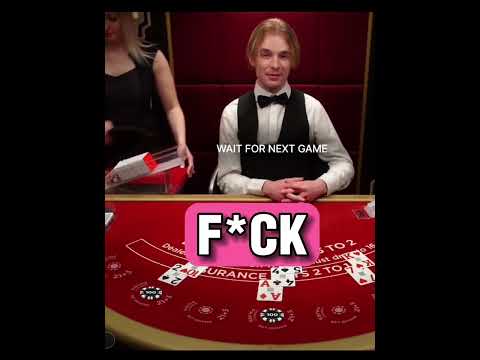
Live dealer experiences bridge the gap between your screen and a real casino floor, streaming a human croupier handling cards or spinning a roulette wheel in real time. You can chat with the dealer and other players, making blackjack or baccarat feel social rather than solitary. Immersive play takes this further with multiple camera angles, slow-motion replays, and close-ups on the action, so you never miss a card flip or ball drop. Q: How do I choose the best live dealer table? A: Look for tables with high-quality HD streams and dealers who interact naturally, as that makes the session feel more like sitting at a Vegas pit. The key is finding a game where the pace matches your comfort—faster tables suit experienced players, while slower ones let you think through each bet.
Streaming technology and real-time interaction
Streaming technology enables low-latency video feeds from physical casino studios directly to the player’s device, creating a synchronous live environment. Real-time interaction relies on a two-way data channel, where the player’s bets and chat commands are transmitted and displayed on the dealer’s interface within milliseconds. The visual and audio streams are encoded at high bitrates to preserve card and roulette wheel detail. To maintain fairness and responsiveness, the system uses synchronized timestamping between the game server and the stream encoder. A typical real-time interaction sequence follows:
- Player selects a chip value and places a bet on the virtual betting grid.
- Bet data transmits to the game server, which updates the studio interface.
- Dealer acknowledges the action via a screen prompt or verbal confirmation.
- Physical game outcome is captured by cameras and streamed to the player.
Popular live tables: roulette, blackjack, and more
Among live dealer options, popular live tables like roulette, blackjack, and baccarat dominate due to their familiar rules and real-time pacing. Roulette offers multiple camera angles to track the ball’s trajectory, while blackjack provides betting side menus for insurance or pairs. Baccarat tables often display historical shoe patterns for streak analysis. Poker variants like Casino Hold’em add a competitive edge with optional bonus bets. These tables stream from dedicated studios or land-based casinos, letting you chat with dealers and adjust chip values instantly.
Popular live tables combine immediate dealer interaction, classic game mechanics, and customizable stakes through a single streaming interface.
Etiquette tips for playing with a human dealer
When facing a live dealer, proper live dealer etiquette begins with muting your microphone unless it’s your turn to act. Always place bets within the countdown, never after cards are dealt. Greet the dealer by name and avoid slow-rolling your hand. Typing “gg” after a loss shows genuine sportsmanship and keeps the table light. Never criticize the shuffle or outcome; the dealer controls nothing but the pace. If connection lags, wait for a prompt rather than spamming the chat box.
Mobile Gambling and Touchscreen Optimization
Touchscreen optimization for mobile casino games demands that every tap, swipe, and drag translates instantly into in-game action, avoiding any latency that breaks flow. Thumb-reach zones must house primary controls like spin buttons and bet adjusters, while secondary features sit in the upper corners. Slots benefit from oversized, responsive reels that register a gentle flick; table games like blackjack need precisely spaced hit/stand buttons to prevent mis-taps.
For roulette, a radial menu that snaps to chip values on touch release minimizes fat-finger errors during high-speed betting.
Haptic feedback, a short vibration on confirmations like a deal or spin, adds necessary physical confirmation without distracting visuals.
App-based platforms versus browser play
When playing casino games on your phone, you’re choosing between app-based platforms and browser play. Apps typically deliver smoother graphics and quicker load times because they’re built specifically for your device’s touchscreen, making spins and card taps feel more responsive. Browser play lets you jump straight into action without downloading anything, but it sometimes sacrifices performance, especially during complex animations. For the best experience, native app performance often wins for high-stakes sessions, while browser play suits quick, casual dips between tasks.
- Apps store game data locally, reducing lag during real-time play.
- Browsers skip storage space but may buffer or slow down on older devices.
- App updates can improve touch responsiveness; browsers rely on your internet speed.
- Browser play offers instant access across different devices without reinstallation.
Touch controls and gesture-based betting
Swipe, tap, and slide transform traditional betting into an intuitive, high-speed experience. For slots, a rapid upward gesture spins the reels, while a downward swipe instantly sets a max bet. In blackjack, a quick double-tap splits pairs without menu diving. Gesture-based betting in roulette lets you pinch-to-zoom the table for precise chip placement, then flick a finger to release the ball. For poker, a smooth left-right slide checks or raises, with a circular gesture activating all-in. After confirming a wager, a long press triggers an auto-play sequence, freeing your hand.
- Swipe reels to spin; tap to adjust bet increments.
- Pinch table view for chip accuracy and flick to spin wheel.
- Slide card to casino usa fold; long press to lock in auto-bet rounds.
Cross-device synchronization for ongoing sessions
Cross-device synchronization for ongoing sessions ensures a player’s active blackjack hand or slot spin transfers seamlessly from a smartphone to a tablet without interruption. The system stores the exact game state—bet amount, remaining credits, and current round progress—on a secure server, updating in real time. This allows a user to start a poker hand on a mobile browser and continue on a desktop browser without re-logging or losing their place. Syncing live dealer interactions, such as chat history and hand history, remains technically demanding due to low-latency requirements. Seamless session continuity also preserves bonus round progress and accumulated loyalty points across devices.
| Session Element | Sync Behavior |
|---|---|
| Active bet & round | State preserved within 1–2 seconds |
| Bonus round timer | Continued across devices without reset |
| Wallet balance | Updated instantly after any transaction |
Bankroll Management for Sustainable Wagering
The old gambler taught me that your bankroll isn’t money—it’s ammunition. For sustainable wagering on casino games like blackjack or slots, divide your total funds into session-sized units, never risking more than 2% of your bankroll in a single bet. This cap prevents a losing streak from wiping you out in an hour and keeps you in the game long enough to ride variance. I watched him set a loss limit before spinning the roulette wheel, walking away the moment it hit, even when the table felt “hot” and his gut screamed otherwise. He knew that chasing losses turns discipline into desperation. Only stake what you can afford to lose without altering your lifestyle—that’s the line between entertainment and harm. A sustainable approach turns each session into a story, not a funeral.
Setting loss limits and win goals
Effective bankroll management hinges on predetermining both a loss limit and a win goal before any session. A loss limit caps your total financial exposure, protecting your bankroll from a single devastating session by forcing a stop once a specific amount is lost. Conversely, a win goal locks in profits by ending a session after achieving a predetermined net gain, preventing the common mistake of chasing further wins. Adhering to these hard boundaries transforms gambling from a pursuit of indefinite winning streaks into a disciplined activity focused on sustainable wagering limits. Sticking to both targets, regardless of emotion, is the core discipline for longevity in casino play.
Percentage-based staking methods
Percentage-based staking methods allocate a fixed fraction of your total bankroll to each wager, directly linking bet size to available funds. For casino games with negative expectation, such as blackjack or roulette, this approach limits ruin risk by scaling bets down after losses and up after wins. A common method is the Kelly Criterion, which optimizes growth by wagering a percentage equal to your perceived edge. Dynamic bankroll allocation is central here, preventing emotional overbetting during losing streaks. Q: How do percentage methods handle a losing streak? A: They automatically reduce bet amounts proportionally, preserving capital until variance reverses, unlike fixed-bet systems that risk depletion.
Avoiding the gambler’s fallacy in decision-making
The gambler’s fallacy—believing a past outcome influences future independent events—directly undermines sustainable bankroll management. In casino games like roulette or slots, each spin or hand is statistically independent; a long losing streak does not increase the probability of an impending win. Chasing losses based on this fallacy leads to oversizing bets, accelerating bankroll depletion through flawed probability reasoning. Instead, decision-making must rely on fixed unit sizes and expected value, not perceived “due” results. A logical approach accepts variance as inherent, preventing emotional adjustments that exceed predetermined loss limits.
Q: How does the gambler’s fallacy specifically distort bet sizing in a session?
A: It prompts increasing wagers after consecutive losses, under the false assumption that a win is “overdue,” which actually risks ruin faster by violating the fixed unit discipline necessary for longevity.
Legal Landscape and Responsible Gaming
You place your chips, feeling the table’s edge beneath your palms, but the house’s advantage isn’t the only rule at play. The legal landscape for casino games determines if that felt is even accessible, drawing a clear line between entertainment and a criminal act in your jurisdiction. Responsible gaming tools, like preset loss limits and time alerts, become your silent partner, transforming a potential spiral into a curated session. You learned this last month, when a pop-up reminder cut your session short, saving you from chasing a loss. The law sets the stage; your accountability writes the scene, deciding if the dice roll remains a choice or becomes a consequence.
Licensing jurisdictions and player protection
Choosing a casino licensed in a reputable jurisdiction like Malta, Gibraltar, or the UK ensures mandatory player protection protocols are in place. These authorities enforce strict rules on secure transaction processing and dispute resolution, safeguarding your funds and data. Always verify the license number at the footer and cross-check it on the regulator’s official site before playing. Q: How does a licensing jurisdiction protect me as a player? A: It legally obligates the casino to follow fair gaming practices, segregate player funds from operational accounts, and provide a formal complaint process if issues arise.
Self-exclusion tools and cooling-off periods
Self-exclusion tools allow you to voluntarily ban yourself from casino games for a set duration, often permanently, while cooling-off periods offer shorter, non-renewable breaks. To activate these, first log into your account and locate the responsible gaming section; then, select the cooling-off period option (typically 24 hours to 6 weeks) or the self-exclusion tool for longer terms (months to years). Finally, confirm your choice—this instantly blocks deposits and gameplay. Both measures are irreversible until the period ends, preventing impulse gambling and ensuring you cannot override the restriction by contacting support.
Recognizing problem behavior early
Spotting the signs early is key to keeping casino games fun. You might notice you’re playing longer than planned, chasing losses to win back money, or feeling restless when you can’t log in. Early problem behavior detection helps you pause before habits harden. Check in with yourself regularly.
- Setting strict time limits before you start and sticking to them.
- Noting if you hide playtime or spending from others.
- Pausing immediately if you feel anxious or irritable when not playing.
Emerging Trends in Interactive Wagering
Live dealer integration now streams real-time roulette and blackjack directly to mobile devices, merging physical casino authenticity with digital convenience. Players can place side bets on dealer outcomes via in-stream overlays. Another trend is skill-based wagering mechanics in slots, where mini-game outcomes depend on player reaction times or decision accuracy, directly influencing payout potential. Virtual reality poker rooms allow eye-tracking for bluff detection, while augmented reality overlays display real-time odds on physical tables during live play. Blockchain-based provably fair systems let users independently verify each card shuffle or spin outcome, reducing reliance on house trust.
Cryptocurrency adoption and anonymous transactions
The shift toward private casino wallets lets players bypass traditional banking delays entirely, funding bets with Bitcoin or Ether in seconds. This removes the friction of KYC checks, as anonymous transactions allow direct peer-to-peer wagering without linking a real identity to a gaming account. Payouts similarly land in a digital wallet without appearing on a bank statement, offering discreet fund management. Smart contracts on blockchain networks automatically verify and settle bets, guaranteeing provably fair outcomes while keeping player data off centralized servers. For users prioritizing privacy, this creates a seamless loop of deposit, wager, and withdrawal that traditional fiat systems cannot replicate.
Virtual reality environments for table experiences
Virtual reality environments for table experiences transform traditional casino games by immersing players in a 3D digital space where they sit at a rendered blackjack, roulette, or poker table. Users manipulate chips and cards using hand controllers, viewing lifelike dealer avatars and fellow players. The environment simulates spatial audio and realistic physics for chip stacking and card dealing. Interactive gesture recognition allows players to signal hit, stand, or place bets naturally. A common question is: How do I handle chips in VR? Players simply reach out, grab virtual chips with their controller, and place them on the table grid, with the system automatically registering the wager amount.
Skill-based elements in modern slots
Modern slots now integrate skill-based bonus rounds where player input, such as aiming, timing, or puzzle-solving, directly impacts payout multipliers. Unlike traditional spins, these interactive features require manual dexterity or quick decisions, merging arcade mechanics with wagering. Common implementations include target-shooting sequences or memory-matching games that trigger after a base win, with variable rewards tied to performance. This shifts player agency, making outcomes partially dependent on ability rather than pure chance. The result is a hybrid experience that appeals to gamers seeking control, though the base game remains random.
Skill-based elements in modern slots introduce interactive challenges that let a player’s performance influence bonus payouts, blending chance with measurable player input.
Social features like leaderboards and tournaments
Leaderboards and tournaments transform solitary play into a competitive arena, directly boosting player retention. Competitive tournament play layers fresh goals onto standard spins, turning progressive jackpots into a race for the top spot. Leaderboards rank players by real-time performance, offering cash or bonus rewards that extend session time. This shifts focus from sheer luck to strategic timing, as choosing the right tournament can yield better value than chasing a single payout. Social bragging rights and tiered prizes create a compelling reason to return daily.
- Climbing leaderboard tiers often unlocks exclusive bonus multipliers or free spins.
- Short-duration tournaments encourage rapid wagering for leaderboard position.
- Real-time rank updates build urgency and direct competition among peers.
- Team-based tournaments add collaborative pressure to maintain collective standing.